Independent · cited · trilingual
The science is moving. Here is where it actually stands.
Families hear "no treatment" and lose hope, or hear "breakthrough" and gain false hope. Both are wrong. This page separates what has genuinely changed in the last five years from what is still waiting, so you can look forward with clear eyes.
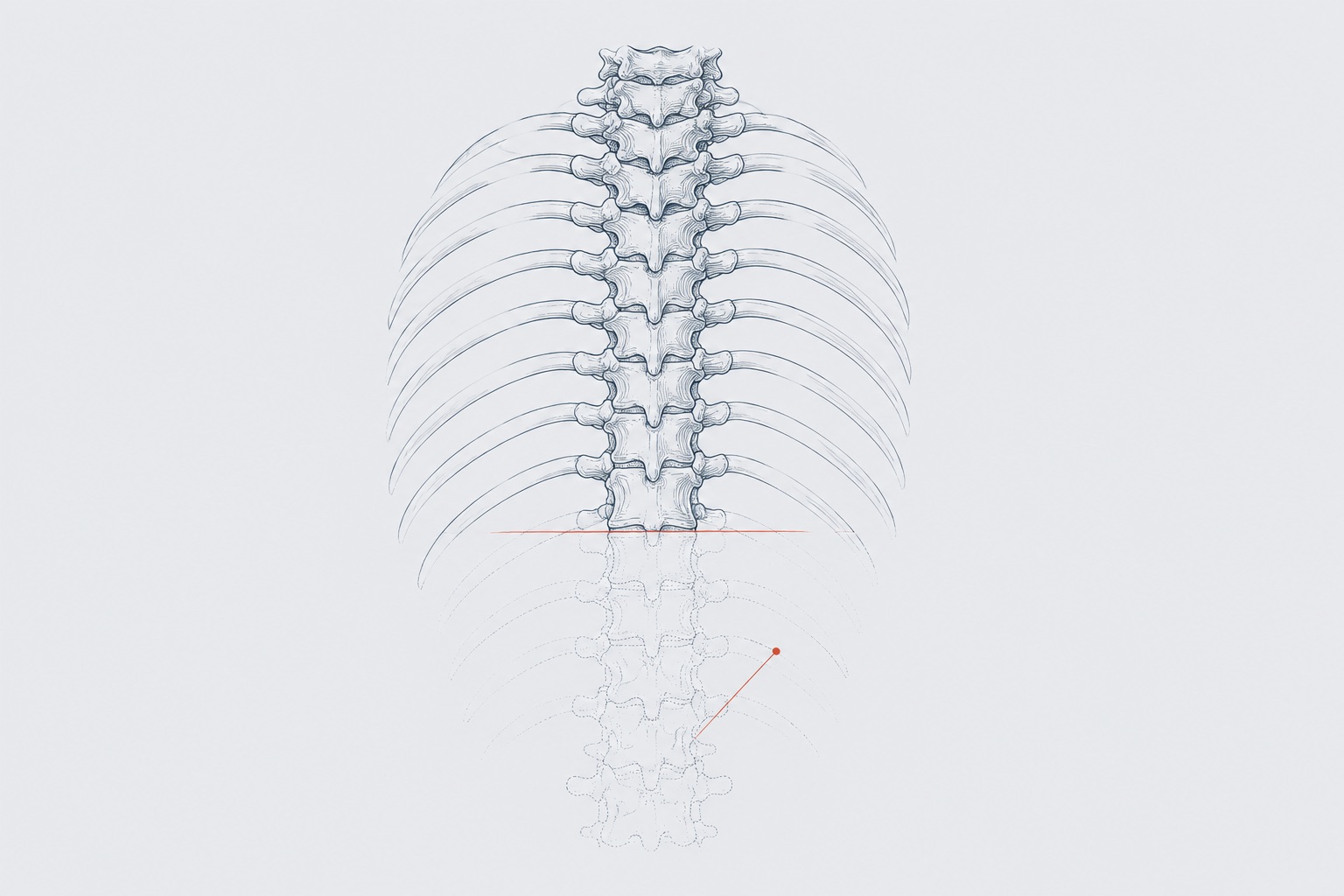
Frontier 1: Growth-friendly surgery keeps the chest growing with the lungs
The core problem in severe SCD/STD is not the spine itself, it is thoracic insufficiency: a chest too small or stiff to support lung growth. The last decade's real advance is treating the chest as a growing structure, not a spine to fuse.
The one-sentence answer: for babies born today with a small chest, growth-friendly implants (VEPTR and its successors) and modern neonatal respiratory care have changed outcomes in ways the grim old statistics never saw.
Journal of Bone and Joint Surgery 2024; Journal of Clinical Medicine 2025The newest synthesis of thoracic insufficiency care
Maps how assessment tools and growth-friendly implants have reshaped management of TIS and early-onset scoliosis: Journal of Clinical Medicine 2025.
Published in Journal of Clinical Medicine 2025The first long-term follow-up of untreated adults with STD
Documents what actually happens without surgery, giving genetic counselors real numbers instead of fear: Journal of Bone and Joint Surgery 2024.
Published in Journal of Bone and Joint Surgery 2024Why lung growth is the yardstick
Scoliosis before age 5 threatens lung development itself; early intervention targets the growing thorax, not just the curve: Journal of Orthopaedic Surgery and Research 2023.
Published in Journal of Orthopaedic Surgery and Research 2023The long VEPTR record
Multi-year follow-up of titanium-rib expansion in children, including Jarcho-Levin patients: Annals of Translational Medicine 2020.
Published in Annals of Translational Medicine 2020“The introduction of growth-sparing surgical interventions as a treatment for thoracic insufficiency has changed the natural history of these conditions.”
the direction of the recent literature
Frontier 2: Genetic diagnosis is accelerating faster than any drug
For a family with no diagnosis, the most valuable recent advance is not a therapy. It is the speed at which genome sequencing can now close cases that were unsolvable five years ago.
Why this matters to you: a molecular diagnosis ends the diagnostic odyssey, unlocks recurrence numbers for future pregnancies, and connects you to the right registry and research. It does not require a new drug to change your family's decisions.
Genome Research 2025Long-read sequencing closes cold cases
In the pan-European Solve-RD program, HiFi long-read genome sequencing solved 21 of 114 previously undiagnosed rare-disease families: Genome Research 2025. If your child's exome came back empty, this is the technology to ask about.
Published in Genome Research 2025The diagnostic baseline keeps improving
New case reports keep refining the recognizable pattern of SCD on imaging and genetics: Radiology Case Reports 2025.
Published in Radiology Case Reports 2025The severity spectrum, documented end to end
From mild forms found incidentally to fatal infantile respiratory failure: Ochsner Journal 2025 records the full range families may face.
Published in Ochsner Journal 2025Frontier 3: The honest trial landscape (read this before you hope or despair)
We check ClinicalTrials.gov regularly. Here is the truthful picture, because families deserve it straight.
As of August 2026: there is no drug trial specific to SCD or STD. None recruiting, none pending. The active research frontier is surgical technique and respiratory support, not pharmacology. Anyone selling a stem-cell or drug "treatment" for these conditions is selling hope without evidence.
ClinicalTrials.gov, checked 2026-08-30What does exist
36 studies touch the surrounding territory: growth-friendly implants for early-onset scoliosis, ventilator management, thoracic insufficiency assessment: ClinicalTrials.gov. Relevant to care, but not SCD/STD-specific trials.
What a real future trial would look like
For a condition this rare, the realistic path is registry-based international studies (like the CHEST registry efforts) rather than classic drug trials. Enrolling in a patient registry is the single most useful thing a family can do for future families.
How to watch it yourself
Search ClinicalTrials.gov for "spondylocostal" and "spondylothoracic". Set an alert. We also log changes in our evidence log.
frontiers where the science is genuinely moving, and 1 where it is not.
Guest notes: families and clinicians writing here
We keep reserved space for first-person accounts from families and clinicians. If you have lived experience with SCD/STD and want to write, we want to read it.
Write to us
editor@jarcholevin.org · 800–2,000 words · your voice, your story
We help edit, you keep the pen
We edit for clarity and add medical context, but the story stays yours
Names optional
Anonymous publication is fine. Medical claims get checked; experience does not get corrected